

"Playbook Fragments"
A short story from my collection "Dead-heading Roses in the Museum Garden and Other Stories" which is published this Saturday, 14th March.
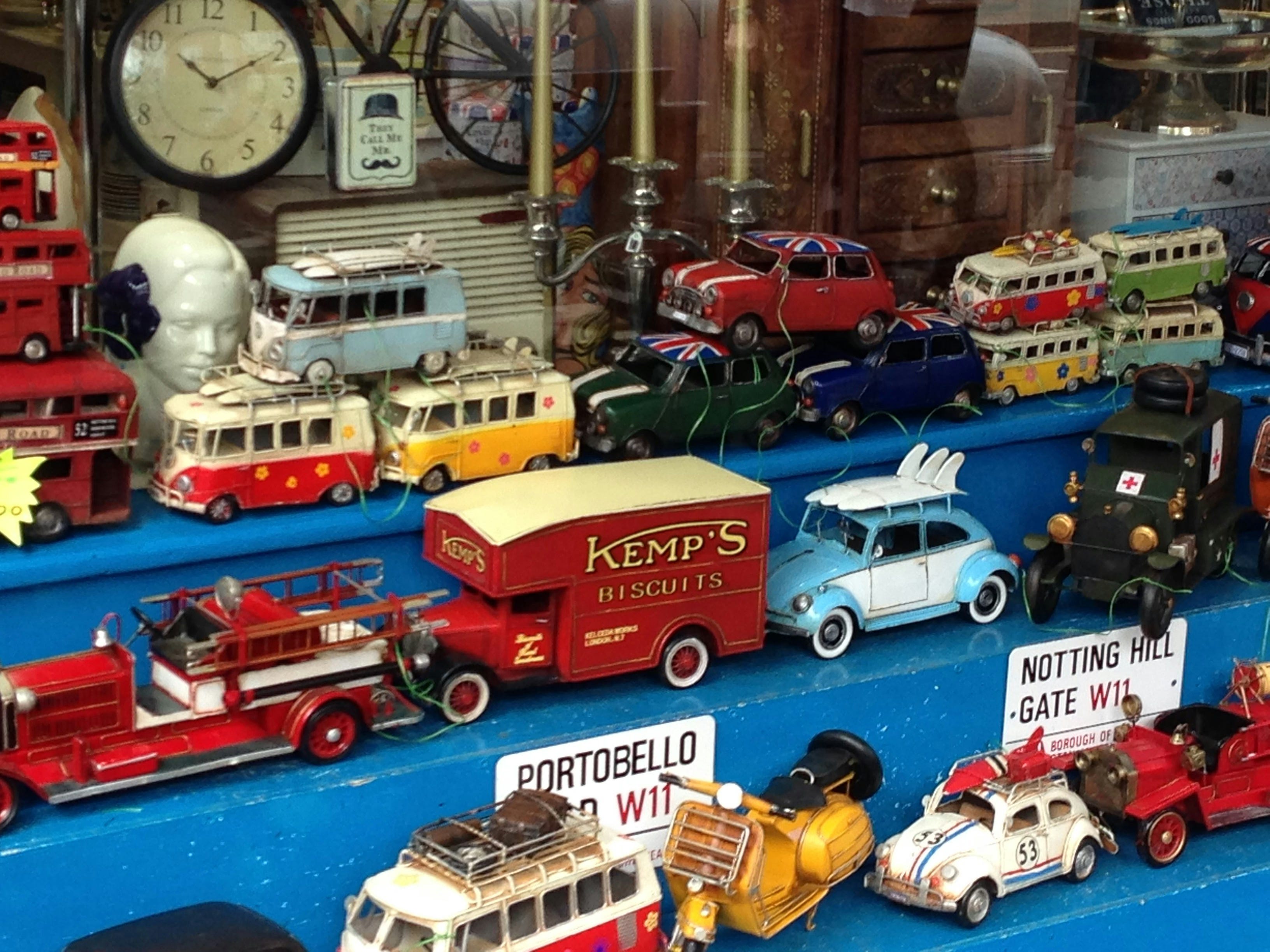
Playbook fragments
It took him so much longer to get to the front door these days. Not merely down to relentlessly increasing age nor the need to lean ever-more heavily on whichever walking stick he had chosen from his collection, rather the hall had recently narrowed, the slim-ish bookcases he had acquired from the local charity shop further encroaching on already limited floor space. More than once in the past month his stick had accidentally caught a melamine-chamfered edge and he had nearly gone down. Never a pleasant experience.
He was used to navigating constricted spaces, however. As his possessions began to occupy all the level surfaces throughout the flat — the top of the dresser, the chests of drawers, the cabinets in the living room, even the tops of the wardrobes in the bedroom — making the most of the floor’s unused capacity had been inevitable, especially as there was now little wall-area left suitable for additional shelving. The ‘invasion of stuff’ (which is how some of those few who came to visit him may have viewed it) had been gradual and insidious. From his perspective, finding homes for things had been a question of priority: needing to put something down (rather than ‘away’) was an imperative which outweighed any benefit of leaving vacant the horizontal space into which it was eventually planted. Indeed, ‘space’ had no worth at all — its only value was in being ‘used up’, its primary function being where things could potentially live.
Which was much the same argument as that which prevented him from throwing anything away. When Joyce had died he’d obviously had no need of her old clothes, shoes, jewellery; nor her somewhat random collection of dolls (all with specially knitted cardigans). There had been an opportunity — had he chosen to see it as such — to ‘de-clutter’, to release half the storage in the flat and rid himself of all those things he couldn’t possibly need in the future. However, even the undeniably logical argument that he could use the freed-up space to extend his treasured collections — die-cast vehicles, Toby Jugs, paperweights — carried no influence in the war against sentiment. ‘Letting things go’ simply didn’t stand a chance. So half the wardrobe remained filled with clothes that were hers and not his, and half the drawers too. Indeed, how could that not be the case when the walls bore all the circumstantial evidence one could need: photographs of the two of them, the family, coach holidays taken with Dot and Ron, dogs that had died years ago. Against this backdrop of not freeing up space, there were always more cars, more jugs, more Caithness glass — and yes, more walking sticks.
~
“Howard!” he said with some surprise having opened the door. “Back again?”
Alun smiled and shook his head. It had been three weeks since his last visit but he had long since given up trying to correct Cedric’s failing appreciation of time — in the same way he had stopped trying to persuade him to get his name right. If Cedric persisted in calling him Howard (as he had done for nearly six months now) then Alun would have to live with that.
“Hello Cedric. Can I come in?”
“Yes, yes — though I’m afraid we’re a bit cramped just at the moment.” The old man turned and shuffled back through the hall towards his overcrowded front room.
“It’s like a minefield in here!” Alun joked.
“Not if you know where the mines are,” Cedric cackled.
It was one of their shared jokes, like a well-worn vaudeville routine. Every time he knocked on the door to check how Cedric was doing, Alun knew they were destined to run through their standard conversational playbook.
“Shall I make some tea?” Alun offered.
“If you can find some clean cups, that’d be grand.” Classic page-one playbook material.
Although he glanced in through its door, Alun eschewed the front room and — walking down a short corridor adorned with images of Joyce, Scotland, and Sheba the mongrel they’d had some twenty years previously — headed for the kitchen. He knew he would find all the mugs clean and neatly ordered in the cupboard nearest the sink. Sixty years of Joyce-enforced tidiness wasn’t something easily usurped.
~
“How have you been?”
“Same as last time,” Cedric said. “And the time before that too. Nothing much changes — or at least not very fast.”
“And Diane is working out for you, is she?”
“Diane?” Cedric gave the name a little thought. “Oh, aye. I suppose so. She’s not Barbara, of course, but she’s efficient enough: comes when she says she will; gets what I need from the shop.”
“It’s a shame Barbara moved away,” Alun shook his head in sympathy. They were still early in the playbook, and he knew he had to get the standing items out of the way.
“That Barbara was a wonderful girl, she was. Wonderful.”
Alun knew Barbara — and he knew she liked being referred to as ‘a girl’, especially as she was nearly sixty.
“And how’s your hip? Still playing up?”
Cedric flicked to the next play.
“They’ve changed my tablets again, the doctors. I don’t think they’ve a clue what they’re doing. Nothing seems to make any difference; it’s not getting any better.”
And it wouldn’t. Alun knew that. Everything Cedric was suffering from was degenerative: his arthritis, his failing memory. In a way his lack of space in the flat was degenerative too — even if that was something he could have effected. Or might have once. Alun couldn’t get the notion out of his head that Cedric was expecting to wake up one day suddenly better, suddenly young again; surely they would find a combination of pills to whisk the pain away for good, and then — freed from the tyranny of stumbling and walking sticks — he would be able to do his own shopping again, or go to the bookies, or see Reg at the darts. Maybe he’d suddenly discover a whole new room off the kitchen too; what couldn’t Cedric do with all that fresh space!
But there was now another villain in play. The most recent tests the hospital had carried out suggested that Cedric had developed cancer. Early stage, but aggressive. Given his age and generally frail health, that was a card which trumped everything else. Alun had agreed with the surgery that he would break the news — but today was not yet the day. They wanted to be certain.
“The doctor’s coming to see you tomorrow, Cedric,” Alun said, abandoning the playbook. “Blood test.”
“Do you know how much that taxi cost me the last time I had to go to the hospital?” However, Cedric wasn’t giving up on the routine just yet.
“Ten pounds. You told me.”
“Twelve quid! Each way!” Cedric shook his head as if the cab fare was the equivalent of the French invading Sussex.
“But you don’t have to go to the hospital tomorrow. The doctor’s coming here. In the morning.”
The old man shook his head again.
“They say they’ll come in the morning, but he won’t be here come tea-time. And I bet they send that foreign chap like they did last time. Couldn’t understand a word he said.”
His message delivered — and knowing there was no point in entering any kind of debate — Alun took a swig of tea. He looked around the room to see if he could identify any new pieces in Cedric’s collections. He’d spotted two small empty boxes in the kitchen so knew something had been delivered.
“Is that bus new?”
“Which one?”
“The green and yellow one on the top shelf.”
~
Diane found him two days layer, sprawled on the lounge carpet. She wondered if he’d had a fall, lost control of his walking stick. But then she saw the cane some way from his body, and around it some pottery fragments. The jugs. And even though she ventured no further into the room, she could tell his shelves were in disarray: die-cast cars and buses had fallen from them; a few paperweights had rolled towards the window. As she went back into the hallway to call 999 she felt the breeze from the kitchen and realised the back door was wide open.
“That was how the burglar got in,” the policeman told Alun the following day. “The old boy must have disturbed him. I suspect, in their own way, they both panicked. They target the old and vulnerable. Cedric isn’t the first and, I daresay, he won’t be the last.”
“But why?”
“They assume there’s a wad of cash hidden away somewhere: in a box perhaps, or at the back of a drawer.”
“Well there may be — but if so, I doubt even Cedric would have been able to find it.”