
Fact or fiction?
Or fact and fiction...
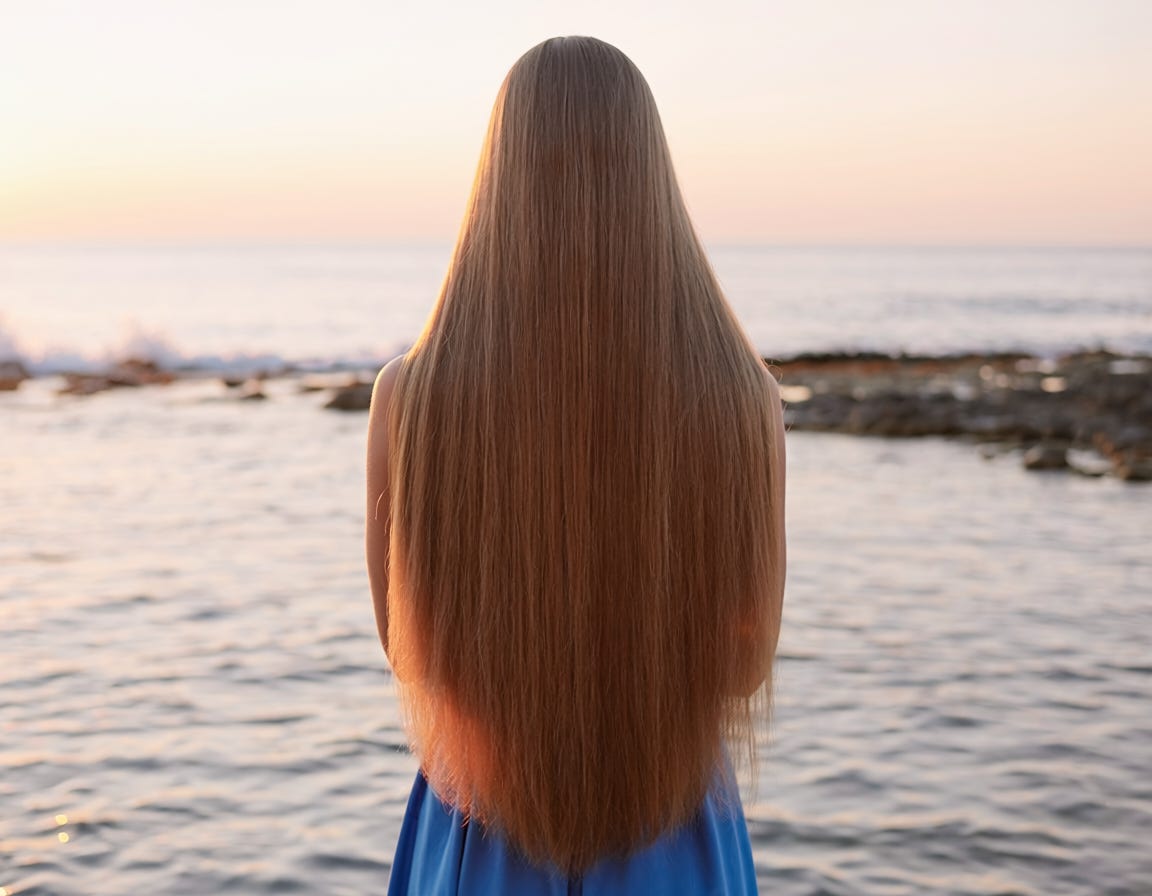
He was about twenty-five when he first saw her. They were in a small café in Bosham Walk, a small cluster of artisan shops located in Bosham Quay, West Sussex. The café was called ‘The Bay Tree’. The tiny mall is still there today, as is a café (though inevitably under different ownership and with a different name). She was in her late teens or early twenties, slim, with extraordinarily long straight hair the colour of pine. Although she wasn’t serving, she was behind the counter showing off a new dress to the staff there. It seemed she was among friends. If memory serves him well it was a vibrant, almost magical blue. She seemed very happy.
If hearts do miss a beat, he’s certain his did then.
After they left the café he and his late parents looking in the Norman church nearby. There’s a cross carved in the stone that surrounds the door. When the Crusade Knights returned to England they carved a cross in the doorframe of the first church they found; it was a sign of gratitude, thanks to God that they had returned home safely. But unlike those Knights, he was suddenly lost.
After that day he returned to the café more often than he needed to. He lived close by and all he wanted was to see her again. But he didn’t; at least not there.
He moved from Bosham into Chichester after a few months in order to be closer to work. There was a disco just outside of town that he and a friend used to go about once a month. That’s where he saw her the second time. Although with two young men, she seemed attached to neither. He probably danced within about twenty of thirty feet of her, once or twice risking a smile that seemed to be reciprocated — but her being accompanied dissuaded him from making any approach (though ironically he was approached by another young lady who had obviously mistaken his smile as being aimed at her)...
The anguish he felt when leaving that evening having seen her there and done nothing about it was indescribable. He hated himself for being so cowardly.
But then, one day soon after, he was doing his after-work grocery shopping in Waitrose. He was at the checkout packing away his things when he looked up to see that she was next in the queue. Not only that, but she was standing exactly where he needed to be standing in order to pay. She smiled when she moved to allow him to finish his transaction with the cashier, after which he walked a little way off, made out as if he was having trouble with his shopping, that a minor reorganisation of bags was called for. He was buying time.
When she finally came through the checkout, that was his chance. Hadn’t she chosen the same one he was in? Hadn’t she chosen to stand much closer to him than she needed to when he was packing? He didn’t need to say much; even “Hello” might have been enough.
But he didn’t. He said nothing. He bottled it.
And that memory has been crushing him ever since.
Somewhere there’s a parallel universe when a different course of action was taken — and he can’t help but wonder what happened there…
So, fact or fabrication? What do you think?
Well, although the question seems a binary one — simple enough, you would think — it may not be. There are ‘nuances’… Let’s take a look.
You think it’s fiction and it is fiction.
Straightforward. No debate. Well done.
You think it’s fact but the whole thing is actually made up - or you think it’s fiction but it turns out to be true.
Ah, not so well done. You’ve been had; we all make mistakes. (Though there’s a caveat here in terms of ‘true’; see below.)
You think it’s fact and every morsel of the story is true.
Again, well done. But there’s a rider here, and it’s in the wording “every morsel of the story is true”. What if that’s not the case? What if the story is fundamentally true except that the events didn’t happen in Bosham but somewhere else? Or the café wasn’t called ‘The Bay Tree’? Or her dress was purple and not blue?
At what point does the story pivot from being fact into fiction?
Is it when there’s one part of the story that’s incorrect? Or two? Or three? And who’s to say?
Well, you are. As the reader you’ve been presented with a short narrative and it’s up to you to decide how it reads, how it feels. Discovering many of the ‘facts’ are incorrect, you might still be happy to think of the story as essentially a true one — or then again, knowing even one item is wrong, choose to dismiss it as truth. Unreliable narrator and all that.
But here’s a thing. How do you know it’s supposed to be true in the first place? Because the author tells you it is? That opens a whole new can of worms regarding the reliability and honesty of the author. Never mind the text playing with you, but what if they are too?
The line between fact and fiction in story-telling is a very fuzzy one, don’t you think? In non-fiction facts are easier to validate e.g. the Second World War started in 1939; Bobby Kennedy was assassinated in Dallas in 1963. Indisputable. But a girl wearing a blue dress in a café on the south coast of England? Maybe it’s having a second source, some corroboration which proves the veracity of the tale. But when you don’t have that independent validation..?
This is the tightrope I think autobiography tries to tread: what you read is purported to be true and yet surely it’s inevitable that somewhere along the line the author has misremembered something, got a date or a place wrong. Without validation you can’t really know. But then again, do you care?
When you start reading something you do so with some level of pre-conception: “this is a novel” you tell yourself, or “this is factual”; and you bring certain assumptions with you to that reading. But if someone says “this may be fact or fiction”, what then?
Interesting isn’t it?
And the short story above? If I told you it was either fact or fabrication would you believe me? And what if I said there is a longer version of the story — called ‘The Bay Tree’ — in my 2017 collection Secrets & Wisdom, what would you say then? That one strays into fantasy so is definitely fiction — but underlying that…
[Writing until the light goes out is free to read because I would much rather you buy one of my books than I charge you for engaging with my site.]
Fun story and interesting questions to the reader. My answer? Starts with the writer...always. If, like myself, the writer is a storyteller that tells stories from their life, then it is true but with a little artisitic license and a change of names and places to protect both the innocent and the guilty (that's me again). If they are a fiction writer: comedy, drama, horror, historical poet or any other gentre, then as a reader, my best assumption, so is the story. Thansk for fun minutes...